




Brightfield Illumination with Dome Lights for Machine Vision
著者: Thomas Stard & Rebecca Charboneau



Introduction to Brightfield Illumination using Dome Lights
Dome lights are a type of coaxial lighting geometry which is defined by light that is centered about the camera’s optical axis. As shown in Figure 1 below, light from the dome light is projected in multiple directions. This leads to diffuse lighting which provides even illumination for specular objects with curved features like electronic circuit boards and automotive parts. The images below show different objects (diffuse and specular) illuminated with a dome light. The images were taken with the 6mm C Series Fixed Focal Length Lens and 25mm C Series Fixed Focal Length Lens using the sensor IMX540 resized to a 2/3” sensor format for the C Series Fixed Focal Length Lenses.

Image Analysis and Evaluation of Brightfield Dome Light Illumination
| 6mm C Series Fixed Focal Length Lens | 25mm C Series Fixed Focal Length Lens |
|---|---|
A 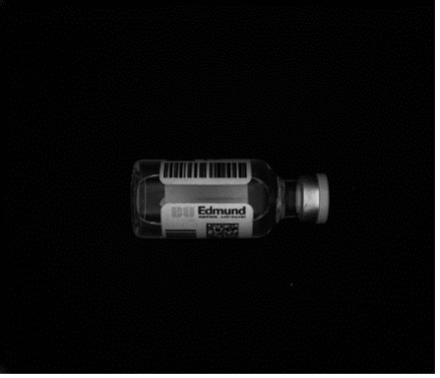 |
A 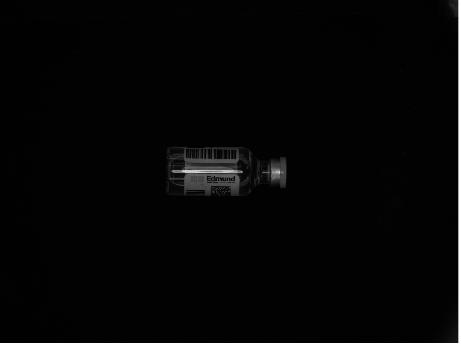 |
B 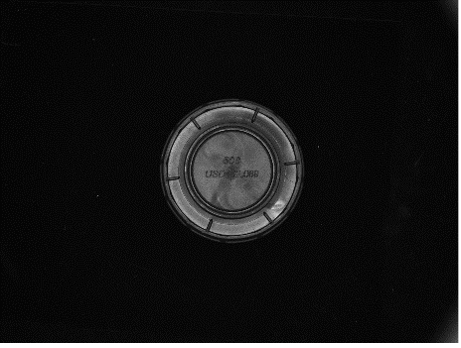 |
B 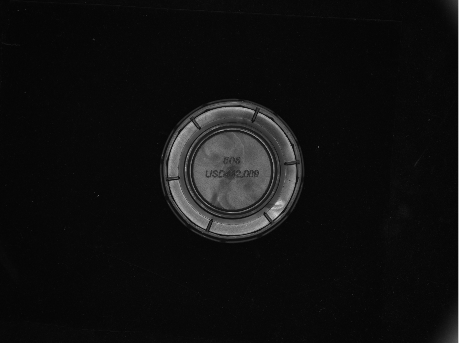 |
C 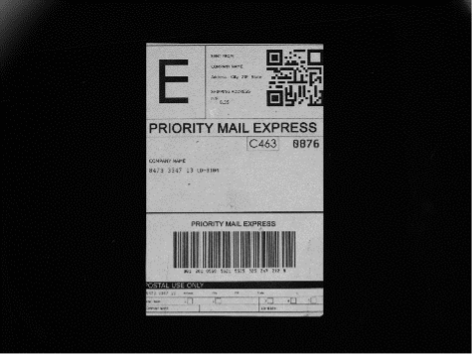 |
C 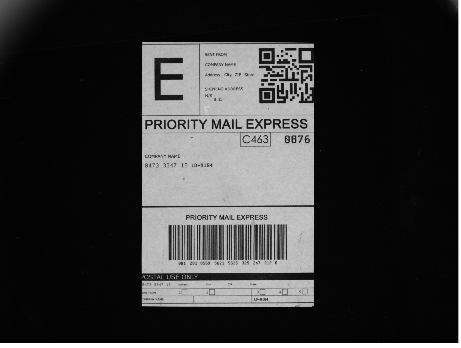 |
D 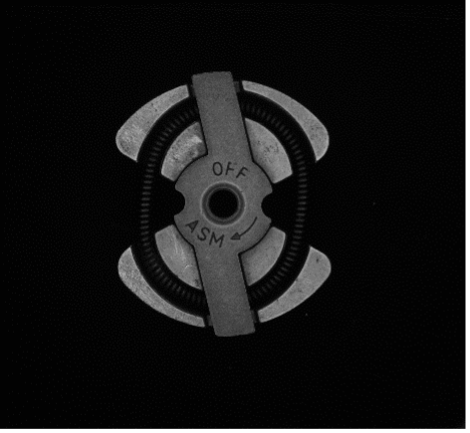 |
D 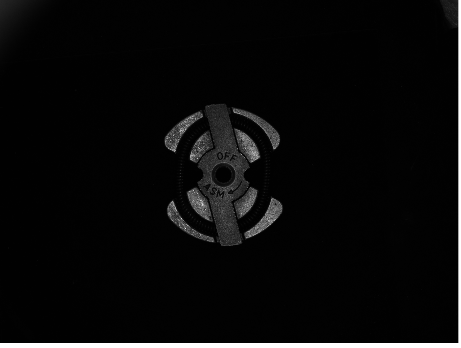 |
E 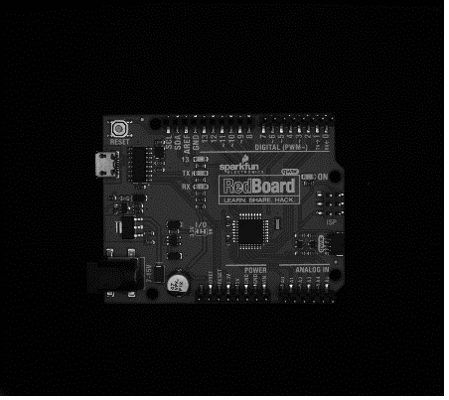 |
E  |
Table 1 features images taken with a white dome light for full brightfield illumination. The images in the left column above were captured using the 6mm C Series Fixed Focal Length Lens at a working distance of 200mm (please note the wide angular field of view caused part of the dome light to be in the image so the images were cropped) while the images in the right column were taken with the 25mm C Series Fixed Focal Length Lens at a working distance of 750mm. The difference in working distance ensured that each lens had a similar magnification and the same f/# was used for both lenses.
Since dome lights are commonly used for reflective objects, the dome light excelled at lighting the printed circuit board (PCB, Panel E). It also provided even illumination with both lenses for the shipping label (Panel C) with little contrast loss on the text. Due to the geometry, material and texture of the objects in Panels A, B, and C, achieving suitable contrast using a dome light proved more difficult. For example, the cap in Panel B did not have great contrast on the serial number which could be a challenge for optical character recognition (OCR) applications. It is also important to consider the size of dome light compared to the angular field of view of the imaging lens. As seen with the shorter focal length lens, the dome light was imaged when the same magnification was maintained compared to the longer focal length lens. A good rule of thumb is to have the inner diameter of the dome light to be 50% larger than the object that is being illuminated.
Conclusion: Key Takeaways for Integrating Brightfield Dome Lights into Vision Systems
In machine vision applications, the use of a dome light is essential when dealing with complex surfaces, such as shiny, curved, or highly reflective surfaces. Its diffuse, uniform illumination eliminates harsh shadows and specular highlights, enabling more consistent image acquisition and reliable inspection results. When looking to optimize vision system performance in challenging lighting scenarios, integrating a dome light is a practical and effective solution that enhances both image quality and system robustness.
More Resources
- Application Note: Backlight Illumination for Machine Vision
- Application Note: Brightfield Illumination with Spot and Bar Lights for Machine Vision
- Application Note: Brightfield Illumination with Ring Lights for Machine Vision
- Application Note: Darkfield Illumination with Ring Lights for Machine Vision
- Application Note: In-line Telecentric Illumination for Machine Vision
- Application Note: Common Illumination Types
- Application Note: Illumination Mounts for Machine Vision Applications
- Application Note: Relative Illumination, Roll-Off, and Vignetting
Bill of Materials
- Camera Used: LUCID Vision Labs Triton2™ TRT245S-MC, Sony IMX540, 24.5MP, Monochrome Camera (TRT245S-MC) (#28-874)
- Lenses Used: Edmund Optics 6mm C Series Fixed Focal Length Lens (#67-709), Edmund Optics 25mm C Series Fixed Focal Length Lens (#59-871)
- Light Used: Advanced Illumination Medium Dome Light DL097
もしくは 現地オフィス一覧をご覧ください
クイック見積りツール
商品コードを入力して開始しましょう
Copyright 2023, エドモンド・オプティクス・ジャパン株式会社
[東京オフィス] 〒113-0021 東京都文京区本駒込2-29-24 パシフィックスクエア千石 4F
[秋田工場] 〒012-0801 秋田県湯沢市岩崎字壇ノ上3番地
The FUTURE Depends On Optics®